
Smoking Confessions by Tracee Lydia Garner
They walked away once. But fate—and danger—won’t let them stay apart.
When a tragic accident injures Sharon Pryce’s son, she’s forced to reconnect with Adrian Parker—the ex she never stopped loving. As old feelings resurface, so do the doubts that once tore them apart. While Sharon investigates the crash and uncovers chilling clues that it might have been no accident, Adrian hides a dangerous secret that could shatter his family. The mystery draws them in and old threats are revealed but Adrian and Sharon must decide if love is worth the risk… or if the past is too much to overcome.
Smoking Confessions is filled with secrets and emotional redemption. Smoking Confessions is the explosive final book in Tracee Garner’s Parker Brothers Series—a romantic suspense filled with passion, betrayal, and the ultimate reckoning of the four families readers have come to know and love.
Parker Brother’s Family Series (4 book series)
https://www.amazon.com/dp/B0B9NX817R
| Soignée Intimate Conversation with Tracee Lydia Garner |
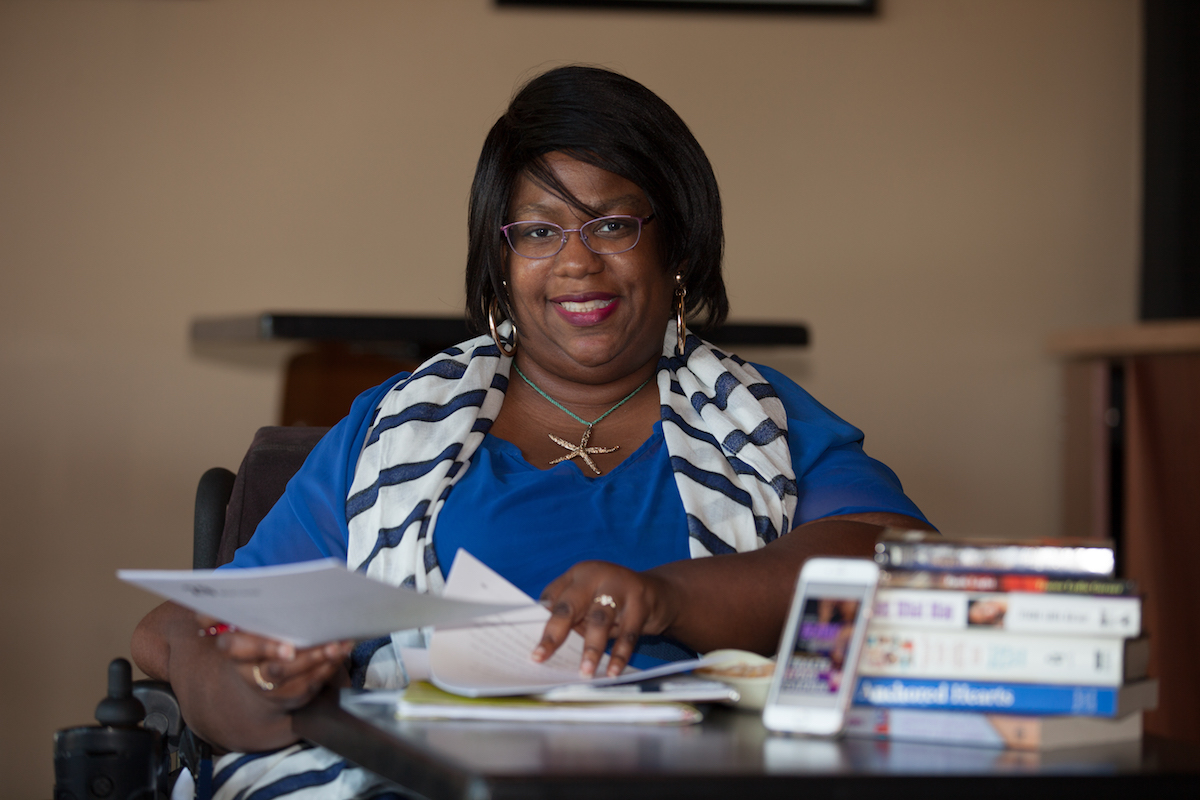
| Tracee Lydia Garner is an international best-selling author of more than 20 books, a motivating speaker, humorous writer and book coach. This new and exciting series is an extension of the dynamic courses she’s created for several regional and national writing groups across the United States. Tracee writes fiction and nonfiction depicting African Americans triumphing over adversity and meeting success whether that be in love, or life pursuits and now aspiring and newly published authors, too. Tracee loves public speaking, teaching workshops, and talking about the craft of writing at every opportunity. She is the creator of Garner Solutions, LLC, coaching new and aspiring writers, helping them through the sometimes-daunting task of writing and professionally publishing their books. Despite being diagnosed at the age of two years old with Muscular Dystrophy, a neuromuscular disease that weakens your muscles over time, Tracee has overcome a great deal of adversity in her life pursuits and her writing to create a life she loves despite dealing with the severity of her chronic condition and using a wheelchair full-time. She holds a BS in Communications and resides outside the DC metropolitan area with her family. Follow Tracee Lydia Garner’s Amazon author page at https://amzn.to/3RjbGff SLM: How did you begin your writing career? When were you first published? I was first published in 2001 after entering a reputable writing contest. I won that contest and the encouragement and validation gave me motivation and direction like nothing else I had ever experienced. It was life-changing. Prior to the contest, my writing was an escape from disability and depression, something I still battle today. SLM: How did your upbringing influence your storytelling style? Growing up, I learned to observe people closely. I also think my disability helped me because sitting around watching people became second nature. I love people and human interaction, and relationship dynamics are so fascinating to me. I also think my parents’ love story plays a role. They were high school sweethearts who went to prom with different people and ended up together before the night was over. A year later my dad dropped out of college to pursue my mother, who had been recruited from Georgia to work for the government. Those little snippets of their stories still resonate with me, especially now as an adult. My stories often feature people fighting for a quality of life, facing trials as difficult or worse than mine, but ultimately finding triumph and love by the end. SLM: What part of the publishing process taught you the most about your own strength? Order, order, order. My first three books were traditionally published and then I went out on my own. I like order, working my list, routines, and systems. Learning about how to publish and promote, and becoming an entrepreneur gave me knowledge and confidence in my abilities. It taught me the importance of planning your work and working your plan. It also taught me patience and perseverance. Entrepreneurship is not for everybody, and you have to keep working even when you do not want to. SLM: What has writing forced you to confront about your past, your relationships, or your purpose? What boundaries do you protect around your creativity? Writing forced me to acknowledge that there will be periods of drought if I do not honor and uplift my own ideas. I have had two creative ruts in my life, writing nothing, feeling down, not even looking at the work, just dreading the entire thing. That also comes from being a perfectionist and impatient. Writing has also made me confront the lack of prayer in my creative process. My prayer life, especially for my writing, is not where it needs to be. That is a problem. I pray about so much else, but often my writing is last, which is odd because when I was failing college, miserable and down, before the contest win, I had prayed to God for “something else.” I tell people that God gave me writing as my “something else” and that He is with me when I am writing, telling me what to put and where. Yet I do not pray first about the writing before I begin, and I think those creative ruts are His way of saying, “Pray more about this right here and I will see what I can do.” SLM: What does writing give you that nothing else does? Writing gives me a sense of control in a world that often feels out of control. Because of my mobility and chronic pain, and having caregivers every morning and evening, I am physically waiting on someone else’s schedule. I do my routines when they arrive and wait when they are late. Even though I have had care for 90 percent of my life, it can still be frustrating. While I am a very independent adult and have some say, I have complete control over my characters and the lives I create for them. In fiction, I get to orchestrate everything they do and say and what happens in their world. It does not work like that in real life. Writing gives me a euphoric high when my fingers glide over the keys, almost like a stellar orchestra that I conduct. It is very exciting. SLM: Introduce your latest work, Smoking Confessions, and the main characters. In Smoking Confessions, Book 4 of the Parker Brothers series, Adrian and Sharon are two people trying to rebuild after personal heartbreak. Sharon comes from a cycle of abuse from a former partner, and Adrian is a product of the foster care system. While he was able to find a loving family, you never forget where you came from. Sharon is equally wary of love considering the choices she has made in the past. Smoking Confessions is about two people with different histories rising together out of the ashes. With danger circling them, and their own adversity, they have to decide that love is fraught with potholes and near fatalities but ultimately worth the risk. SLM: What’s something about the book that readers won’t find in the description? The quiet emotional toll of secrets kept in the name of protecting your family. There is a lot simmering beneath the surface in this book about pride, shame, and what we owe to the people we say we love. It also begs the question: even if there is shame, do you trust your family with your darkest secrets? Why or why not? What keeps us from telling the truth to our family, and what does it cost us to keep it? Illness, anger, and strained future relationships are all part of the price. SLM: Which character tested your patience the most, and what did they teach you in the process?Sharon. She is fierce and intelligent but does not trust and has unresolved issues in her heart. Honestly, the entire book frustrated me. In November 2023, I participated in National Novel Writing Month, or NaNoWriMo. This month-long event challenges writers to complete 50,000 words in 30 days. It is fun and provides community in an isolating profession. I wrote 50,000 words in 13 days, and by day 30, I had written 82,000 words. It was a record, even for me, but then nothing. I put so much energy into that month, really two weeks, that I went through a creative drought for months after. This entire book tested me more than any other in my almost 24 years of writing and publishing. I think a part of me was also hesitant because I was closing a series that had been with me for nearly 20 years, and that likely stalled me. SLM: Did any characters say or do something that surprised you, even though you created them? Yes. Adrian’s quiet demeanor and dedication to protecting everyone he loves, even if it ultimately pained him. His emotional silence spoke volumes. I almost felt his thoughts and feelings were not explained enough on the page, but I think they come across more strongly by being left quiet. It made him more real and relatable because I believe men keep so much inside. And I mean older men, not millennials or alphas. LOL. Just joking. Kinda. SLM: What conversations are you hoping this book starts? How trauma shows up in love, and how we can still choose joy anyway. That you must take risks. That caregivers and protectors need care, too. Most of all, how we often let people think what they want about a situation when they are completely wrong. We get mad at folks who are wrong, but we do not say, “This is what really happened.” Sometimes we do not want to engage, or we act like we do not care, but I believe you should tell the truth. Do not let people assume and make up their own stories in the absence of it. SLM: Tell us about something you cut from the book that you still think about. Why didn’t it make the final draft? I did not show Adrian visiting someone in jail. I used flashbacks of him thinking about it and focused more on what the person he visits says rather than depicting the meeting itself. Doing this created more distance and made it seem less dangerous. So when another character visits this person in jail, they get much more than they bargained for. The scene and revelation are stronger through that other character instead of Adrian. SLM: What’s one personal truth you discovered about yourself while writing this book? That with God’s help, I still have it. I never thought I would be finishing book 21. Some people write 50 to 100 books, but it is not my full-time job. The fact that I still can, despite illness and hospitalizations, while working a nine-to-five, amazes me. The fact that I still love this work is even more amazing. As a creative, I sometimes want to master something and move on, but writing does not let me go. I told myself I would take a year off, and then I heard one of my characters laughing in the background. I cannot not write. I have about 9 or 10 works in progress, and every time I think I will put the keyboard aside, another story comes. SLM: Have you ever considered walking away from writing? What made you stay? Yes. When I don’t sell the books I thought I might, or when recognition doesn’t come. The promotion side can be tough in a seated position. I can’t gallivant all over the country like I’d love to without risking airlines damaging my very expensive chair or even injuring me during transfers. But I thank God for so many local opportunities, virtual events, conferences, and workshops that help me feel included. I get to feel “outside, outside,” as Beyoncé says. I stay because the stories keep coming, and writing is a balm for my mental health. I stay because I want to read what I’ve written—and I know there are at least a few other folks waiting too, and I appreciate them deeply. SLM: What’s something you’ve sacrificed—time, energy, relationships—to keep writing? Always time. I’ve said no to outings, dates, and downtime to finish a book. But when I hold that final product, it’s worth it. SLM: How do you protect your mental health and creativity when the publishing space feels loud or competitive? I unplug. I rest. I actually keep what I call a refueling toolkit. I encourage everyone to make a little list of things that help them reset. Mine includes journaling—sometimes in Notion when my hands are tired but also handwritten lists, sitting on the deck in the sun, reading, listening to music, and watching YouTube. I love thrifting and cleaning videos. I also try to attend at least one conference a quarter, in person or virtually. If I can’t travel, I create the experience at home. I’ll take PTO, order DoorDash, and act like I’m at a hotel with Starbucks in the lobby and room service. It helps me immerse myself. I remind myself my journey isn’t a race. I also take staycations, either organizing or setting up for a writing project, or simply resetting for the next quarter. And I talk to a mental health counselor—right now, even thirty minutes once a month makes a huge difference. SLM: What’s the best decision you made as an indie or traditionally published author? Taking ownership of my voice and my stories. Indie publishing gave me control and allowed me to build and release things on my own timeline, which is probably for me, one of the best parts of indie publishing. SLM: How can readers connect with you, and what’s the best way for them to support your work beyond buying a book? Follow me on social media, IG is where I mostly post nowadays and join my mailing list, and share my books with others. Reviews, shoutouts, and telling a friend go a long way in supporting indie authors. People can contact me on any of my platforms below: Website: http://www.traceegarner.com Twitter: http://www.twitter.com/teegarner Instagram: http://www.instagram.com/teegarner TikTok: https://www.tiktok.com/@traceelydiagarner |